


Kids and teens don’t always need more talking. Sometimes they need a different way in. Books can help in those moments, especially when talking feels like too much. They don’t demand a response or a push to solve the issue. They wait. A kid or teen can come back to the same page, skip ahead, or pause without explanation. That privacy matters. It gives kids room to engage with hard things without pressure, and for many kids that makes a difference.
When self-help books are done well for young people, they don’t tell them how they should feel. They help kids notice what’s already happening inside them. They give names to thoughts and emotions that feel confusing, overwhelming, or embarrassing, and they do it in a way that reduces shame rather than adding to it. A kid or teen who realizes “this happens to other people too; I’m not alone” feels less isolated and less ashamed. When struggle is normalized and named, kids are better able to tolerate frustration, anxiety, and the urge to quit without shutting down.
Teens often need books for a slightly different reason. Adolescence is intense and can be overwhelming; many teens misread the intensity as something being wrong with them. Learning about emotions, stress, and the brain through material written to teens, not just about them, can be a game changer.
It helps teens understand that their reactions make sense, that intensity is part of development, and that difficulty doesn’t mean defectiveness. When shame is reduced, teens shut down less and engage more.
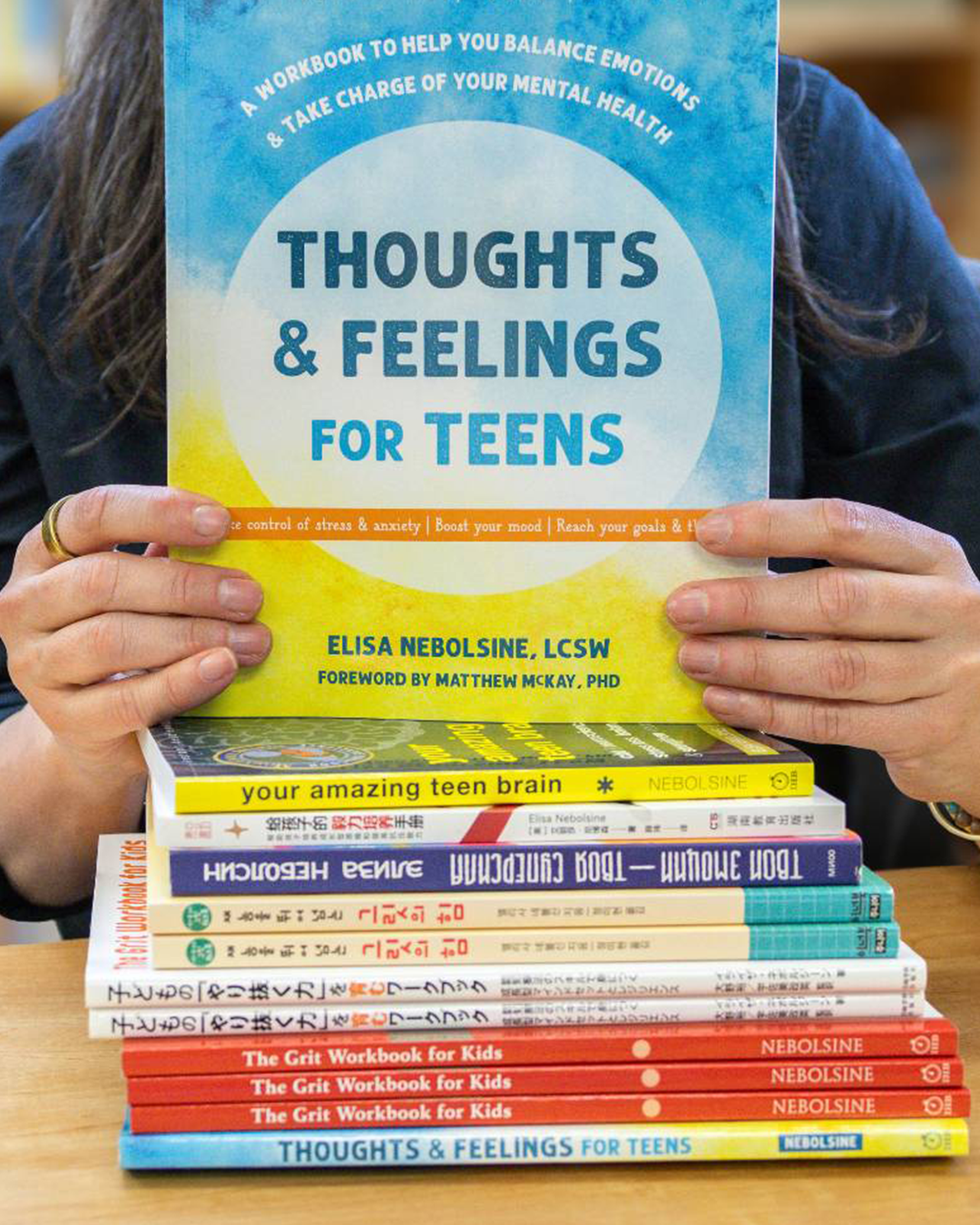
That belief, that kids and teens do better when their experiences are named and normalized, has guided the books I’ve written over the years. I’ve written books meant to be picked up, put down, revisited, and used in real life, including hands-on workbooks and a guide for teens and parents, like The Grit Workbook for Kids, Thoughts and Feelings for Teens, and Your Amazing Teen Brain. The real value isn’t the book itself, but what kids and teens begin to notice, practice, and trust about themselves along the way.
In a neighborhood like Del Ray, where community, connection, and care matter, these small, steady tools are one of the many ways we support the well-being of the kids and families growing up around us.
Elisa Nebolsine is an award-winning therapist, author, and Cognitive Behavioral Therapy specialist, helping children and adults learn to recognize thought and behavior patterns and identify where and when those patterns help and hurt. She’s also the author of The Grit Workbook for Kids, Your Amazing Teen Brain, and Thoughts & Feelings for Teens, which help children and teens harness the strengths and compensate for the vulnerabilities unique to their ages. Learn more at elisanebolsine.com.
