


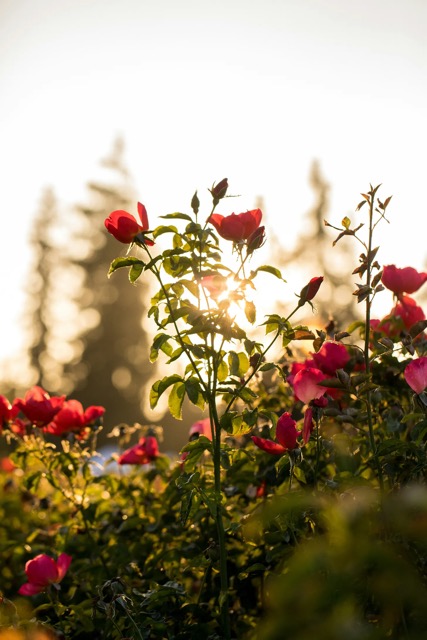
As Valentine’s Day approaches, our social media feeds and stores are filled with an abundance of all things roses and chocolate. As a clinical herbalist, I love and work with both for their medicinal and healing properties. I’ll save the cacao for another day and focus on roses in this edition.
Roses (Rosa spp.) are associated with the emotional heart and thus we often gift them as an expression of our affection, acknowledgement, and love. But love never exists in isolation, much rather it paves the way for grief and associated emotional pain – after all, experiencing grief is a powerful reminder that we love. And thus, it makes perfect sense that roses are a key plant ally in herbal formulas supporting humans in times of grief and emotional heartache. These kinds of formulas can range from the more homeopathic spectrum of flower essences to full-strength medicinal teas, tinctures, and elixirs that I work with in my clinical herbal practice.
But there’s more: roses can also be effective healers for the physical heart. Biochemically roses, like all medicinal plants, contain a spectrum of constituents that can have positive and supportive effects on our organism. Polyphenols are found in petals and rosehips alike, and are well known for their antioxidant qualities, protecting against cell damage.
As a botanical relative of roses, hawthorn trees (Crataegus spp.), have a strong affinity for the cardiovascular and nervous system alike. All plant parts, flowers, leaves, and berries, are rich in polyphenolic flavonoids with anti-inflammatory and antioxidant properties, resulting in healing and toning effects on the inside lining of our blood vessels. Hawthorn for medicinal purposes is well researched with numerous clinical trials confirming the tree’s cardiotonic and protective effect. Thus, hawthorn regularly finds her way into my clients’ tincture or tea formulas supporting wellbeing and healthy cardiovascular function, cholesterol levels, and nervous system balance during perimenopause, menopause, and the second half of life.
Furthermore, roses are a time-tested and common ingredient in skin care products, often featured as the lead player in lines specifically formulated for mature skin. Aside from the nourishing properties of the vitamin-rich rosehips, both, petals and fruits, contain tannins, which have a so-called astringent effect. Meaning, they pull the tissues together so that they don’t lose but much rather hold on to and thus lock-in moisture. Making a skincare oil infused with dried rose petals and/or rosehips is a lovely and rewarding DIY project for the beginner home herbalist as it is also very versatile with a variety of possible uses like lotions, body butters, salves, or lip balms. Reach out if you’d like me to teach you how.
Other examples of rose family members that have traditional use and researched medicinal qualities include raspberry leaf (Rubus spp.), a well-known tonic for the uterus, or agrimony (agrimonia spp.), which is one of my favorites to include in tea blends offering support for loose bowels.
And last but by no means least, let’s not forget about our trusted friend the apple (Malus spp.) -yep, that’s a rose as well. The whole tree – leaves, bark, blossoms and fruit – is bursting with gifts beneficial for our health.
Why not make February a month for some rose explorations beyond the bouquet in a vase?
Always pay attention to acquire medicinal plant material and herbal products from trusted farmers and herb companies who not only provide high quality herbs but are also mindful of ethical sourcing and farming practices with particular attention to just and respectful treatment of land, plants, and people. No idea where to start looking? When you sign up for my newsletter, I’ll send you my list of favorite bulk herb and herbal product resources.
Clinical Herbalist and Forest Therapy Guide Kay Sidahmed (PhD, MS) is founder and owner of Cura Viriditas, a clinical herbal practice in service of connecting plants and humans to foster individual, communal, and planetary healing and wellbeing. In her work Kay simultaneously draws from the findings and tools of modern science as well as traditional herbal healing knowledge and wisdom from around the world. She offers individual and group consultations, classes, workshops, and forest bathing. Her work focuses largely on menopause, second-half-of-life, and family health support, and she is passionate about bringing people together and creating communal and inclusive spaces of learning and exploration. Learn more at curaviriditas.com.
