

I’ve spent over a decade working with athletes, active parents and all types of individuals in chronic pain- all of them looking for answers their doctors couldn’t give them. What I’ve found, again and again, is that the body isn’t broken. It’s just not being heard. And at the center of it all? The nervous system.
Lesson One: Most Muscle & Joint Pain Starts With a Nervous System That Needs a Tune-Up
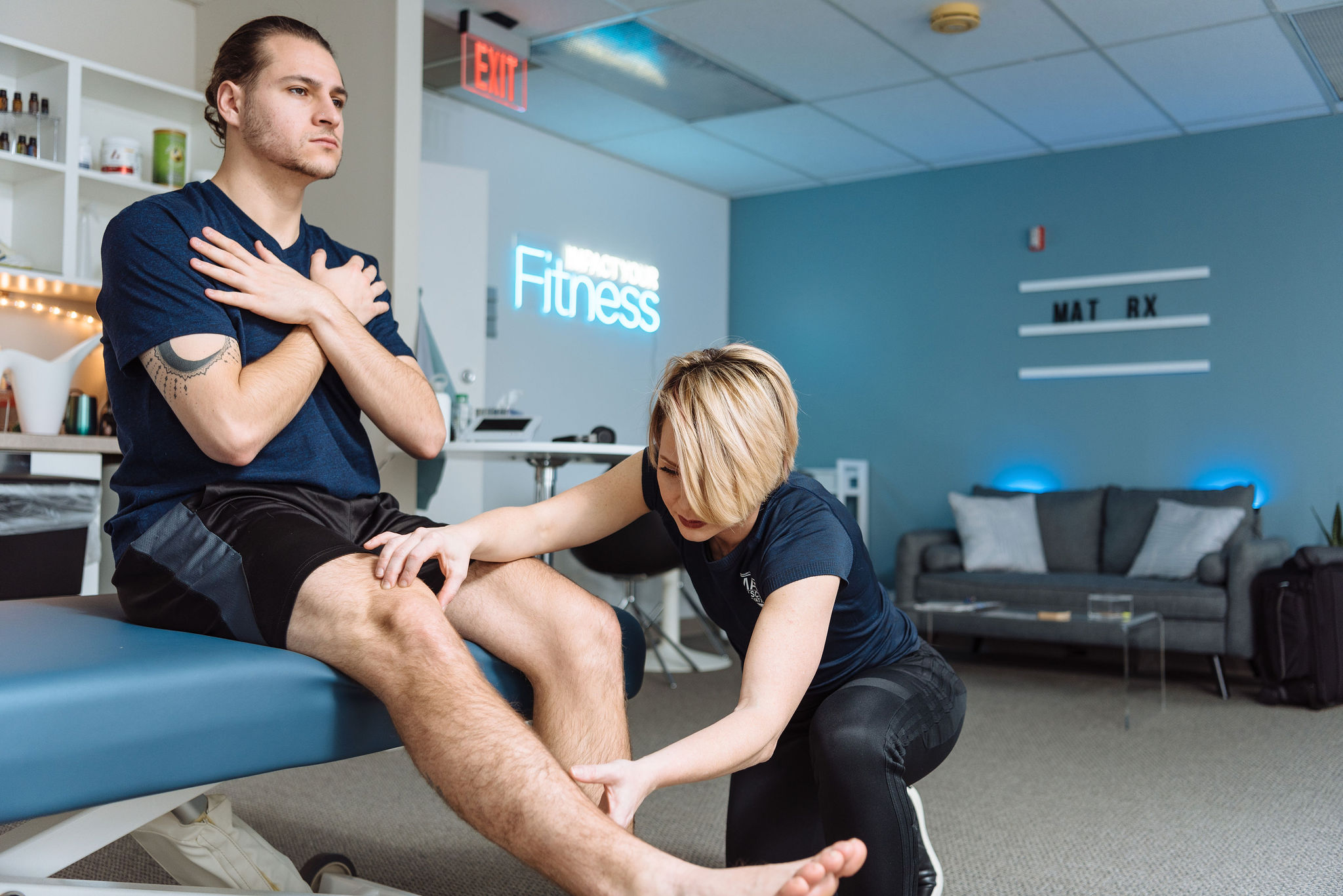
When clients come to me with tight hips, sharp knee pain or stubborn shoulder stiffness, the instinct- theirs and often their previous practitioners’- is to go straight to the muscle or the joint. Stretch it. Ice it. Work it with the foam roller or have their massage therapist pound out the kinks. But over and over, I’ve found a different culprit: a nervous system that’s running in a dysregulated state.
Here’s what that means practically: good quality movement comes from a regulated nervous system. When the nervous system is receptive and well-organized, muscles respond appropriately- they contract when they should, recovery time between workouts is shorter, and the joints move in harmony.
“Flexibility isn’t just about muscle length. It’s about whether your nervous system feels safe enough to let you move.”
When that regulation is off, you don’t just get stiffness. You get protective movement compensations that shift load to the wrong places, altered blood flow that starves tissues of oxygen, and a body that’s essentially bracing itself against the world 24 hours a day. The muscle isn’t the problem- it’s responding to what the nervous system is telling it to do.
This is why two people with identical MRI scan reports can have completely different levels of pain and function. The nervous system is the variable nobody’s measuring- and it’s often the most important one.
Lesson Two: Our Anatomy Education is Outdated- and It’s Holding Athletes and the Fitness Industry Back
I say this with respect for the teachers in the universities: the way we’ve been taught anatomy is oversimplified to the point of being misleading. Muscles are listed, named, and memorized in groups. The body doesn’t work in isolation and our perception of how it does has been reduced to a system.
What I’ve come to understand through years of hands-on work is that the kinetic chain — the interconnected web of muscles, fascia, joints and neural pathways — is where the real story lives. A weak hip doesn’t just affect the hip. It changes how the knee tracks, how the lower back loads, how the shoulder blade moves. Everything is talking to everything else, constantly.
“When you understand how the kinetic chain truly functions, you stop chasing pain and start finding its source.”
This shift in perspective is one of the most powerful things a trainer, therapist or athlete can make. When you see chains instead of parts, you stop asking “what muscle is tight?” and start asking “why is the system compensation here?- and that’s when real progress happens.
Lesson Three: Movement Improvements Are More Than a Number- The Nervous System Knows
In a world obsessed with metrics and over intellectualizing- it’s easy to reduce progress to a number on a chart. But what I’ve witnessed with my own clients has taught me something much more nuanced: when movement performance improves, something profound is happening beneath the surface.
The nervous system is an extraordinarily precise monitor. It tracks muscle tone- the resting tension in every muscle in your body- and it is constantly gathering and interpreting sensory data from your joints, skin and connective tissue. This is called sensory efficiency, and it is the foundation of all coordinated movement.
“When a client gains ten degrees of shoulder rotation, that’s not just a mechanical change. It’s the nervous system saying I trust this now.”
When we see a meaningful improvement in someone’s movement- whether that’s a hip that finally opens up, a shoulder that reaches overhead without pain, or a knee that tracks cleanly again- the nervous system has updated its map. It has received better information, processed it more efficiently, and granted the body permission to move in a way it previously restricted.
That’s not just physical. Clients often describe feeling lighter, more confident, more present in their bodies. Because they are. Improving movement isn’t just about the joint- it’s about restoring the conversation between the muscle, body, mind, nerve and brain.
The Bottom Line
The nervous system is not a background player. It is the conductor- and when it’s functioning at its best, everything in the body has the potential to work well too. After more than a decade in sports medicine and neuromuscular work, this is the truth I keep coming back to.
Whether you’re an elite athlete or someone who just wants to move without pain, the path forwarded isn’t always through more effort. Sometimes it’s through better communication- between your muscles, your joints and the extraordinary system that governs it all.
If any of this resonates with you, I invite you to explore what a truly regulated, well functioning nervous system feels like in your own body.
Ready to move better, feel stronger and live with less pain- text or call us at 571-473-2287 to book a free consultation or demo session today.