


Grief is quite naturally and mainly associated with death and the anticipated or experienced loss of a loved-one, an aspect we certainly focused on during my death doula training. However, grief has a much wider reach and role to play in our lives. It is a fundamental aspect of our human experience. Grief walks alongside us on a daily basis in the many small and ordinary moments, reminding us that every aspect of life is ephemeral.
A couple of weeks ago, we settled our daughter into her first year of college some 300 miles away. The social media algorithm informed me that my emotional landscape surrounding this milestone may feel like grief but is not quite grief. Much rather it was suggested that whimsical names like momancholy or momsitioning are more fitting descriptors for my felt emotions. While I wholeheartedly embrace the creative wordplay, I also somewhat disagree as I fully recognize what I am experiencing as grief, real grief.
Grief has many different names, faces and intensities and we all have our very unique encounters with it. There is no right or wrong, no more or less valid form of grief, though it seems important that our grief does not get stuck but rather keeps moving through and transforming with us. Acknowledging and tending to our smaller daily and ordinary grief is equally important as it can help prepare us for the more colossal and overwhelming grief experiences.
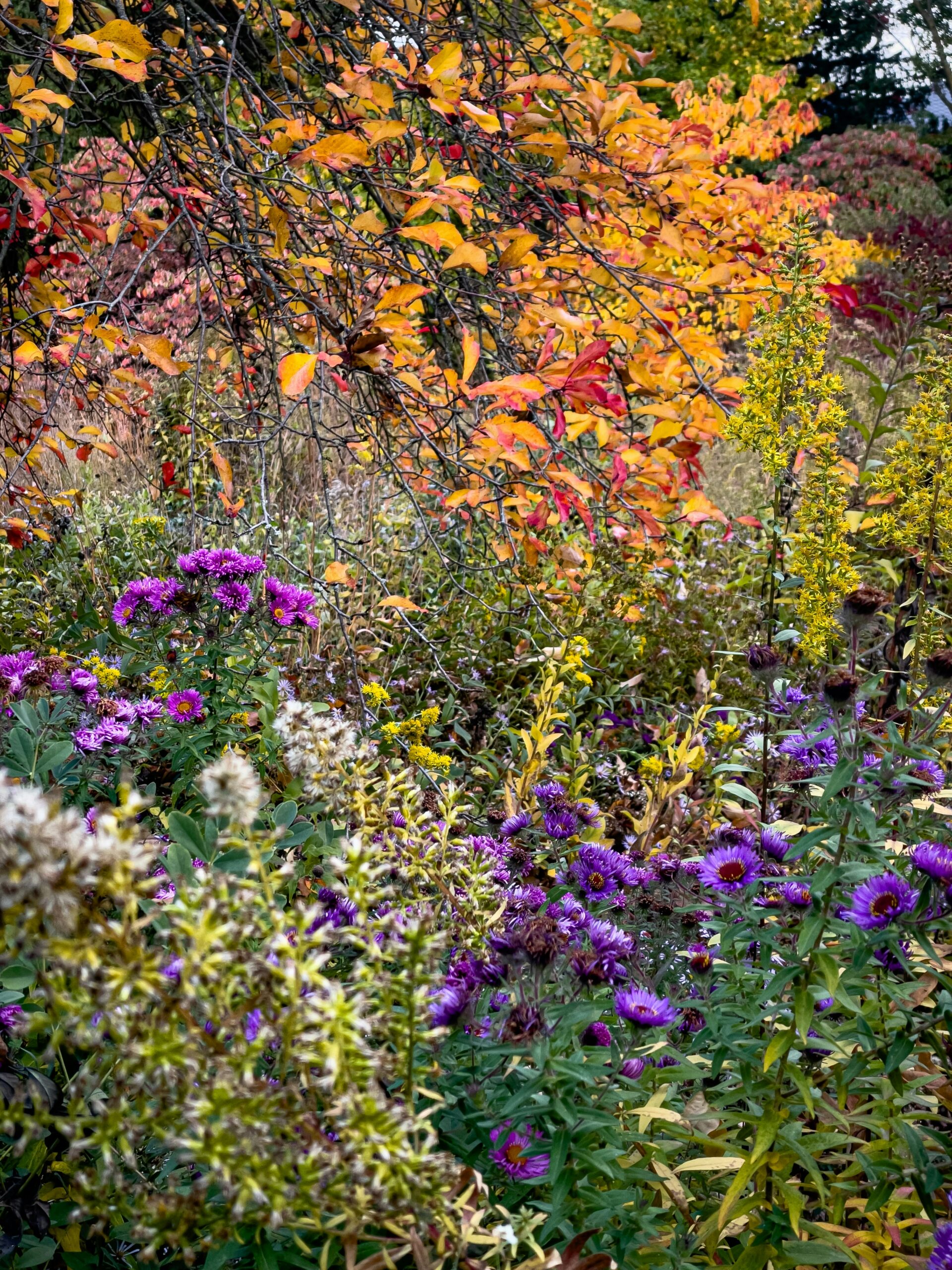
In many healing and wisdom traditions fall is the season strongly associated with grief. Nature is quite busy then with preparations for the darker and colder winter months, and this intense time of transition shows up in an abundance of colorful and heartaching beauty. Thus, spending time outdoors and immersed in the shifts and changes of the autumnal season offers an opportunity for shared grief tending with the natural world.
Not surprisingly, our plant kin are excellent grief companions and are just waiting for us to reach out for their help. This can happen in a variety of ways — spending time with them, engaging in tactile and sensory experiences, journaling or creating ar alongside them, or ingesting their medicine in form of foods, teas or tinctures.
From an herbalist perspective, medicinal plants in the category of nervines play a key role in grief tending. Nervine is an umbrella term for plants that affect the nervous system in a variety of ways.
- There are nervine herbs that can help us feel more grounded and overall calmer and less anxious like Skullcap (Scutellaria lateriflora), Chamomile (Matricaria chamomilla), or Motherwort (Leonurus cardiaca).
- Herbs with a stronger aromatic profile can support us by moving the grief through our bodies so it does not get stuck. This often comes along with an uplifting and heart soothing sensation. Examples are Lemon Balm (Melissa officinalis), Linden (Tilia spp.), or Damiana (Turnera diffusa).
- Nervines that deeply nourish the nervous system and can help body, mind, and spirit to adapt with more ease to a new or unsettling situation, like Oat Straw and Milky Oats (Avena sativum), Holy Basil (Occimum tenuiflorum), or Reishi (Ganoderma spp.).
- Plants in the rose family are trusted companions for grief care as they support the physical and emotional heart. I wrote about this back in February in The Healing Power of Roses.
Grief is a paradox, simultaneously drawing us into the realm of suffering and beauty. And thus, it is a vital sign – a reminder that we live, love, and inevitably face loss.
Join me for Living Grief – Crossroads of Beauty & Sorrow, a multi-sensory autumn garden retreat of connection and curiosity. Herbal wisdom – grief crafting – community ritual. October 10, 10am-2:30pm. In the magical healing garden of Wild Roots Apothecary in Sperryville, VA. I will help with organizing ride shares. More info & registration at curaviriditas.com/events.
Kay Sidahmed (PhD, MS) is a clinical & community herbalist, forest therapy guide, and death doula. She is founder and owner of Cura Viriditas, a clinical herbal practice in service of connecting plants and humans to foster individual, communal, and planetary healing and wellbeing. In her work Kay interweaves the findings and tools of modern science with traditional herbal healing knowledge and wisdom from around the world. She offers individual and group consultations, classes, workshops, and forest bathing. Her work focuses largely on (peri)menopause & menstrual health, second-half-of-life, and chronic &; autoimmune conditions. She is passionate about bringing people together while creating communal and inclusive spaces of learning and exploration. Learn more at curaviriditas.com.
